Stomach Cancer
Expert surgical treatment for gastric cancer — advanced robotic, laparoscopic, and open gastrectomy with India-leading outcomes.
Understanding Stomach Cancer
Stomach (gastric) cancer develops when cells in the stomach lining grow uncontrollably. It is the 5th most common cancer worldwide and often presents late because early symptoms are vague. Early diagnosis and expert surgical management dramatically improve survival.
Dr. Abhishek Aggarwal specialises in curative stomach cancer surgery — including total and subtotal gastrectomy with D2 lymphadenectomy, robotic and laparoscopic gastrectomy, and complex multi-organ resections when cancer has spread locally.
Signs & Symptoms
- Persistent indigestion, bloating, or heartburn
- Unintentional weight loss and loss of appetite
- Early satiety (feeling full after a small meal)
- Vomiting (sometimes with blood) or black stools
- Abdominal pain or discomfort
- Fatigue and unexplained anaemia
Treatment Approach
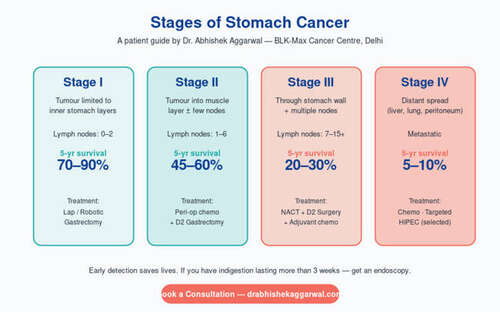
Treatment depends on stage. Early cancers may be cured by surgery alone; locally advanced tumours typically require perioperative chemotherapy plus surgery (FLOT regimen). Dr. Abhishek personally plans each case with medical and radiation oncologists for a fully integrated approach.
Frequently Asked Questions
Answers to the most common questions about Stomach Cancer.
What is the survival rate for stomach cancer after surgery?
Survival depends on stage at diagnosis. Stage I cancers treated with curative surgery have 5-year survival rates of 70–90%. Stage II is around 50–60%, while locally advanced disease with modern chemotherapy plus surgery achieves 30–50%. Early diagnosis is the single most important factor.
Is robotic or laparoscopic gastrectomy as effective as open surgery?
Yes. Multiple international trials (KLASS, JLSSG, STOMACH) confirm that minimally invasive gastrectomy performed by experienced surgeons achieves the same oncologic outcomes as open surgery, with less pain, faster recovery, and shorter hospital stays.
Do I need chemotherapy before or after surgery?
For locally advanced gastric cancer, perioperative chemotherapy (FLOT regimen) is the current standard — typically 4 cycles before and 4 cycles after surgery. Very early cancers may be treated with surgery alone.
What is D2 lymphadenectomy and why is it important?
D2 lymphadenectomy means removing all lymph nodes along the major arteries supplying the stomach. It is the gold standard for gastric cancer surgery and is associated with significantly better long-term survival when performed by a specialist.
How long is the hospital stay after gastrectomy?
Typically 5–7 days after laparoscopic or robotic gastrectomy, and 7–10 days after open surgery. Full recovery to normal activities usually takes 4–6 weeks.
Will I be able to eat normally after stomach removal?
After total gastrectomy, you will need to eat smaller, more frequent meals (6–8 per day initially). Most patients return to near-normal eating and maintain a healthy weight within 6 months. A dedicated dietitian guides you through the transition.
What causes stomach cancer?
Risk factors include H. pylori infection (most important), smoking, high intake of salted/smoked foods, family history, pernicious anaemia, previous stomach surgery, and certain inherited conditions like hereditary diffuse gastric cancer.
Can stomach cancer be detected early?
In countries with screening programs (Japan, Korea), endoscopy can detect early cancers. In India there is no routine screening, so anyone with persistent dyspepsia over age 40 should have an upper endoscopy to rule out cancer.
What is the cost of stomach cancer surgery in India?
Cost varies by hospital and technique. Laparoscopic gastrectomy at a top Delhi centre typically ranges ₹3–5 lakh; robotic surgery ₹4–7 lakh. Dr. Abhishek provides transparent estimates and can help with insurance pre-authorisation.
How do I get a second opinion from Dr. Abhishek?
Simply send your reports (endoscopy, biopsy, CT scan) through the contact form. Dr. Abhishek personally reviews every case and responds within 24–48 hours with a detailed opinion — free of charge.
Meet Dr. Abhishek Aggarwal
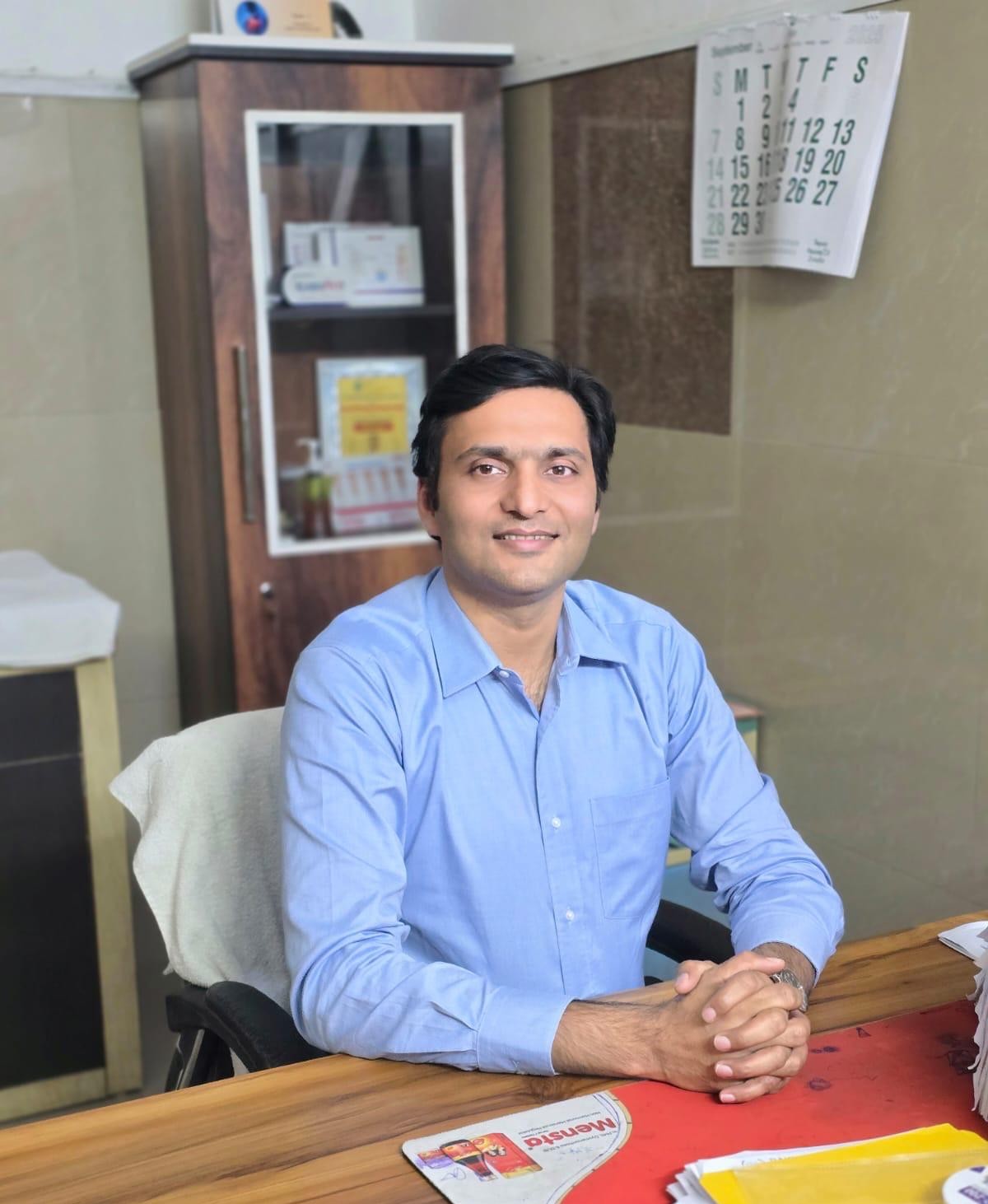
Dr. Abhishek Aggarwal is a highly skilled GI & HPB surgeon with over 10 years of experience in managing complex gastrointestinal and hepato-pancreato-biliary diseases, with a special focus on oncological surgery. He currently serves as Associate Director – GI Oncosurgery at BLK-Max Super Speciality Hospital, where he is actively involved in delivering advanced surgical care for GI and HPB malignancies.
He has trained and worked in reputed high-volume centres, gaining extensive expertise in complex oncological procedures and multidisciplinary cancer care. His clinical practice is firmly grounded in scientific, evidence-based medicine, ensuring that patients receive treatment aligned with the latest global standards and research.
OPD Timing: 09:00 AM – 05:00 PM
Contact Dr. Abhishek →