Stomach Cancer: 7 Early Warning Signs Every Indian Should Know
Stomach cancer is curable when caught early. Learn the 7 early warning signs of gastric cancer every Indian adult should watch for — and when to see a specialist.
Get a free second opinion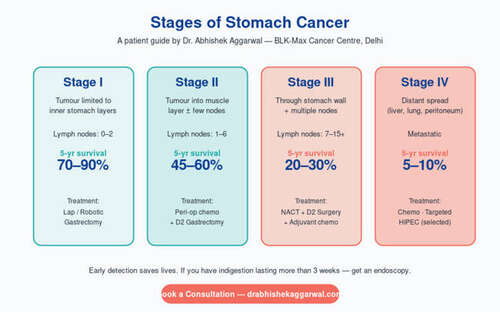
Stomach cancer is curable when caught early. Learn the 7 early warning signs of gastric cancer every Indian adult should watch for — and when to see a specialist.
Stomach cancer — also called gastric cancer — is one of the most common cancers diagnosed in India, and one of the most tragically late-diagnosed. Globally, it is the fifth most common cancer and the fourth leading cause of cancer deaths, but in India its behavior has a unique twist: because its early symptoms mimic everyday indigestion, patients often wait months or even years before seeking medical advice. By the time they do, the cancer has frequently advanced to a stage where cure becomes difficult. The good news is that when stomach cancer is caught early, it is highly treatable — and in many cases, completely curable through surgery. The challenge, then, is not the disease itself, but recognizing it in time. In this guide, I walk you through the seven early warning signs every adult in India — especially those above 40 — should never ignore, the risk factors that put you at higher risk, and exactly what to do if any of these symptoms appear in your own life.
Why stomach cancer is often missed in India
Indian diets are rich, spicy, and often high in salt and preserved foods. Heartburn, bloating, and gastric discomfort are so common that most people treat them with over-the-counter antacids for months — sometimes years — without ever consulting a doctor. This cultural normalization of ‘acidity’ is the single biggest reason stomach cancer in India is diagnosed late.
Another factor is access. Upper GI endoscopy, the gold standard for diagnosing gastric cancer, is still perceived as an uncomfortable or ‘serious’ test by many patients. It is not. A modern endoscopy takes 8–10 minutes, is performed under light sedation, and can detect cancer at a stage when simple surgery can save your life.
The bottom line: any persistent upper-abdominal symptom in an adult over 40 deserves an endoscopy. Better one normal report than a missed diagnosis.
The 7 early warning signs you must not ignore
1. Persistent indigestion or heartburn. Occasional acidity after a heavy meal is normal. Indigestion that lasts more than three weeks despite antacids, or that returns every time you stop medication, is not. This is the single most common early symptom of stomach cancer and also the most commonly dismissed.
2. Unexplained weight loss. Losing more than 5% of your body weight over six months without any change in diet or exercise is a red flag for many cancers, stomach cancer included. If your clothes suddenly feel loose and you cannot explain why, please get evaluated.
3. Early satiety. If you find yourself feeling full after just a few bites — when earlier you could easily finish a full plate — a growing tumour may be reducing the capacity of your stomach. Many patients describe this as “I just don’t feel hungry anymore.”
4. Nausea or vomiting, especially with blood. Coffee-ground vomiting (vomit that looks dark brown or black) is a warning sign of slow bleeding from a stomach lesion. Bright red blood is an emergency. Either warrants an urgent endoscopy.
5. Difficulty swallowing. Tumours located near the junction of the food pipe and stomach can cause progressive dysphagia — first with solids, then with liquids. Any new difficulty swallowing in an adult should be investigated within days, not weeks.
6. Black, tarry stools (melaena). This is the hallmark of upper-gastrointestinal bleeding. It smells distinctly foul and sticks to the toilet. Do not wait. Go to a hospital.
7. Unexplained anaemia. A drop in haemoglobin in a middle-aged or older adult, with no obvious cause, is a classic presentation of slowly bleeding stomach cancers. Iron tablets may temporarily mask the problem — please ask your doctor for an endoscopy, not just a blood tonic.
Who is at higher risk?
Stomach cancer does not strike at random. Certain groups carry a meaningfully higher lifetime risk and should be especially vigilant. Risk factors include: chronic Helicobacter pylori infection (the single largest risk factor globally), smoking, heavy alcohol use, a diet high in smoked, salted, or pickled foods, obesity, blood group A, pernicious anaemia, and a first-degree family history of gastric cancer. In India, populations in the North-East and certain parts of the South have a notably higher incidence. If any of these apply to you, treat even mild persistent symptoms seriously.
When to see a specialist — and what to expect
If you have any one of the seven warning signs for more than three weeks, the next step is a consultation with a GI surgeon or gastroenterologist. The most important test is an upper GI endoscopy — a thin flexible camera passed through the mouth to directly visualize the stomach lining. If anything suspicious is seen, a biopsy is taken in the same sitting. Results are typically available in 48–72 hours.
If cancer is confirmed, staging investigations follow: a CT scan of the chest, abdomen, and pelvis, blood tumour markers (CEA, CA 19-9), and sometimes an endoscopic ultrasound or PET-CT. Only once the stage is known can a personalized treatment plan — surgery, chemotherapy, targeted therapy, or a combination — be designed. At early stages, surgery alone is often sufficient and gives a 5-year survival of over 80%.
Prevention: what you can actually do
You cannot change your genetics, but you can dramatically lower your risk. Get tested and treated for H. pylori if you have chronic gastric symptoms — a simple two-week antibiotic course can reduce your lifetime stomach cancer risk by up to 40%. Stop smoking. Reduce salt, pickles, and processed meat. Increase fresh fruits, vegetables, and whole grains. Maintain a healthy weight. And for anyone over 40 with persistent upper-GI symptoms or a family history, ask your doctor whether you should have a baseline endoscopy.
Frequently Asked Questions
Can stomach cancer be cured if detected early?
Yes. Early-stage stomach cancer (Stage I) has a 5-year survival rate above 80% with timely surgery, and many patients are cured completely. The earlier it is caught, the less aggressive the treatment needs to be.
Is endoscopy painful?
No. Modern upper GI endoscopy is performed under light sedation and most patients experience no discomfort at all. The entire procedure takes about 10 minutes and you can usually go home the same day.
At what age should I get screened for stomach cancer?
Routine screening is not recommended for everyone in India, but anyone over 40 with persistent upper-abdominal symptoms, a family history of gastric cancer, or known H. pylori infection should have a baseline endoscopy.
Does H. pylori always cause stomach cancer?
No, but it is the single largest risk factor. Treating H. pylori infection with a short antibiotic course can substantially reduce your lifetime risk.
Consult Dr. Abhishek Aggarwal
Associate Director — GI, HPB & Cancer Surgery
Meet Dr. Abhishek Aggarwal
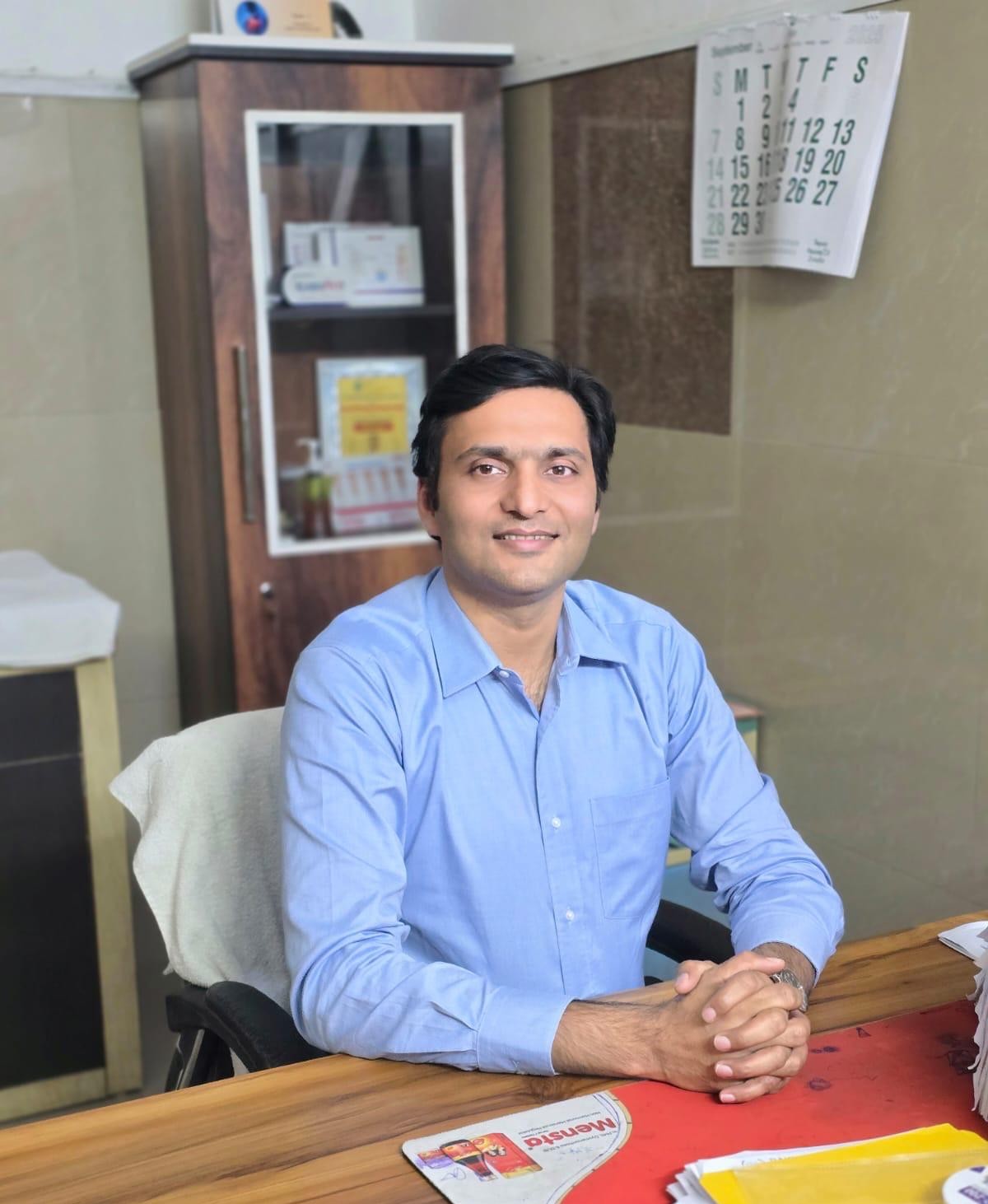
Dr. Abhishek Aggarwal is a highly skilled GI & HPB surgeon with over 10 years of experience in managing complex gastrointestinal and hepato-pancreato-biliary diseases, with a special focus on oncological surgery. He currently serves as Associate Director – GI Oncosurgery at BLK-Max Super Speciality Hospital, where he is actively involved in delivering advanced surgical care for GI and HPB malignancies.
He has trained and worked in reputed high-volume centres, gaining extensive expertise in complex oncological procedures and multidisciplinary cancer care. His clinical practice is firmly grounded in scientific, evidence-based medicine, ensuring that patients receive treatment aligned with the latest global standards and research.
OPD Timing: 09:00 AM – 05:00 PM
Contact Dr. Abhishek →