Cost of Cancer Surgery in India vs USA / UK — A 2026 Comparison
A transparent 2026 comparison of cancer surgery costs in India, the USA, and the UK — with package inclusions, quality benchmarks, and medical travel logistics.
Get a free second opinion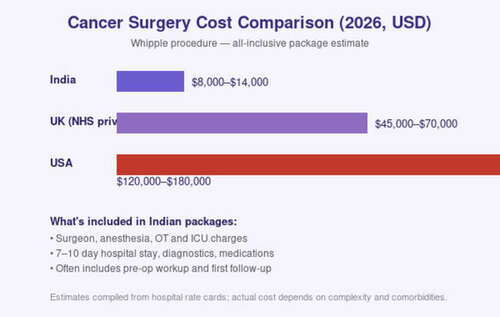
A transparent 2026 comparison of cancer surgery costs in India, the USA, and the UK — with package inclusions, quality benchmarks, and medical travel logistics.
One of the most difficult questions I am asked by international patients and their families is deceptively simple: “How much will it cost?” The honest answer is that cancer surgery is dramatically cheaper in India than in the US or UK — typically by a factor of 10 to 15 — without, in experienced centers, any compromise in surgical quality or outcomes. For many families abroad, this single economic fact is the difference between getting treatment and not getting it. But medical costs are never just one number. They include the operation, the hospital stay, the hidden extras, the travel, the post-operative care, and the risk of complications. In this guide, I give you a transparent, 2026-accurate breakdown of what cancer surgery actually costs in India, the UK private sector, and the USA — and what you need to know beyond the headline number.
The headline numbers
A Whipple procedure for pancreatic cancer — probably the most complex commonly-performed cancer operation — is a useful benchmark. At a high-volume Indian HPB center in 2026, the all-inclusive package typically ranges from USD 8,000 to 14,000. The same operation at a private UK hospital costs GBP 35,000 to 55,000 (USD 45,000–70,000). In the USA, the total bill — hospital, surgeon, anaesthesia, and follow-up — commonly ranges from USD 120,000 to 180,000.
For gastrectomy, colorectal surgery, and hepatobiliary resections, the ratios are broadly similar. Indian costs are typically 8–15% of US costs and 15–25% of UK private costs.
What the Indian package includes
An all-inclusive Indian surgical package at a reputable center generally covers: the surgeon’s fee, anaesthesia, operating theatre charges, ICU stay (typically 1–2 days), room charges for 7–10 days, diagnostics, routine medications, nursing, and often the first post-operative follow-up. Some packages also include pre-operative workup and staging scans.
What is typically not included: complications requiring extended ICU stay, additional imaging, blood products beyond the planned amount, chemotherapy if needed after surgery, and accommodation for family members. Always ask for the specific exclusions in writing before admission.
Is the quality really equivalent?
This is the question every international patient asks, and the honest answer is nuanced. At top-tier Indian centers — the ones that perform the highest volumes of complex cancer surgery — outcomes are genuinely comparable to the best international centers. Peer-reviewed Indian data from high-volume HPB units shows mortality rates of 1–3% for Whipple procedures, which matches the best Western benchmarks. Surgeons at these centers often trained in the US or UK, speak fluent English, and publish internationally.
At lower-volume hospitals — including some very well-marketed ones — outcomes can be significantly worse. The key is not ‘India’ as a country but the specific center and specific surgical team. Always ask for published outcomes, annual volumes, and the name of the surgeon who will actually operate on you — not just the consulting physician you meet first.
Total cost of treatment abroad — beyond the hospital bill
For international patients, the total trip cost includes more than the hospital package. Expect to add: round-trip airfare for the patient and one companion (USD 1,500–3,000), accommodation for 3–4 weeks (USD 1,000–2,500 depending on city), local transport, medical visas, medical records translation if needed, and a buffer of USD 2,000–5,000 for unforeseen medications or tests. Even with all of these, the total trip cost for a complex cancer operation in India is typically under USD 25,000 — a fraction of the US price.
Most international-friendly Indian hospitals have dedicated international patient coordinators who arrange visas, airport pickup, accommodation, and interpreters. Ask to speak to one before you book anything.
How to make the right choice
Four practical questions will guide a good decision. First: what is the specific all-inclusive package price, in writing, and exactly what is excluded? Second: what is the annual volume of my specific operation at this center, and what is the surgeon’s personal mortality and complication rate? Third: what is the plan for follow-up after I return home, and who will coordinate with my local doctors? Fourth: what is the complete estimate for additional chemotherapy or radiation if I need it, so I can budget for the entire treatment, not just the surgery?
Cost is a legitimate factor in cancer care. But the lowest price at an inexperienced center is usually the most expensive decision of your life. Look for centers that combine genuine expertise with transparent pricing — they do exist in India, and their outcomes speak for themselves.
Frequently Asked Questions
Is cancer surgery in India safe for international patients?
At high-volume centers with internationally trained surgeons, yes. Outcomes at the top Indian HPB and GI cancer centers are comparable to leading Western hospitals. The key is choosing the right center, not the country.
How do I verify a hospital’s outcomes?
Ask the surgical team directly for annual case volume, mortality rate, and complication rate for your specific operation. Reputable centers publish these numbers and share them openly.
Will my insurance cover treatment in India?
A growing number of international insurers now cover planned surgery in India, particularly for expatriate and medical-travel-friendly policies. Always get pre-authorization in writing.
How long should I plan to stay in India for cancer surgery?
For a major cancer operation, plan for 3–4 weeks total: 1 week pre-op workup, 7–10 days in hospital, and 1–2 weeks of recovery before flying home. Your surgical team can tailor this to your case.
Consult Dr. Abhishek Aggarwal
Associate Director — GI, HPB & Cancer Surgery
Meet Dr. Abhishek Aggarwal
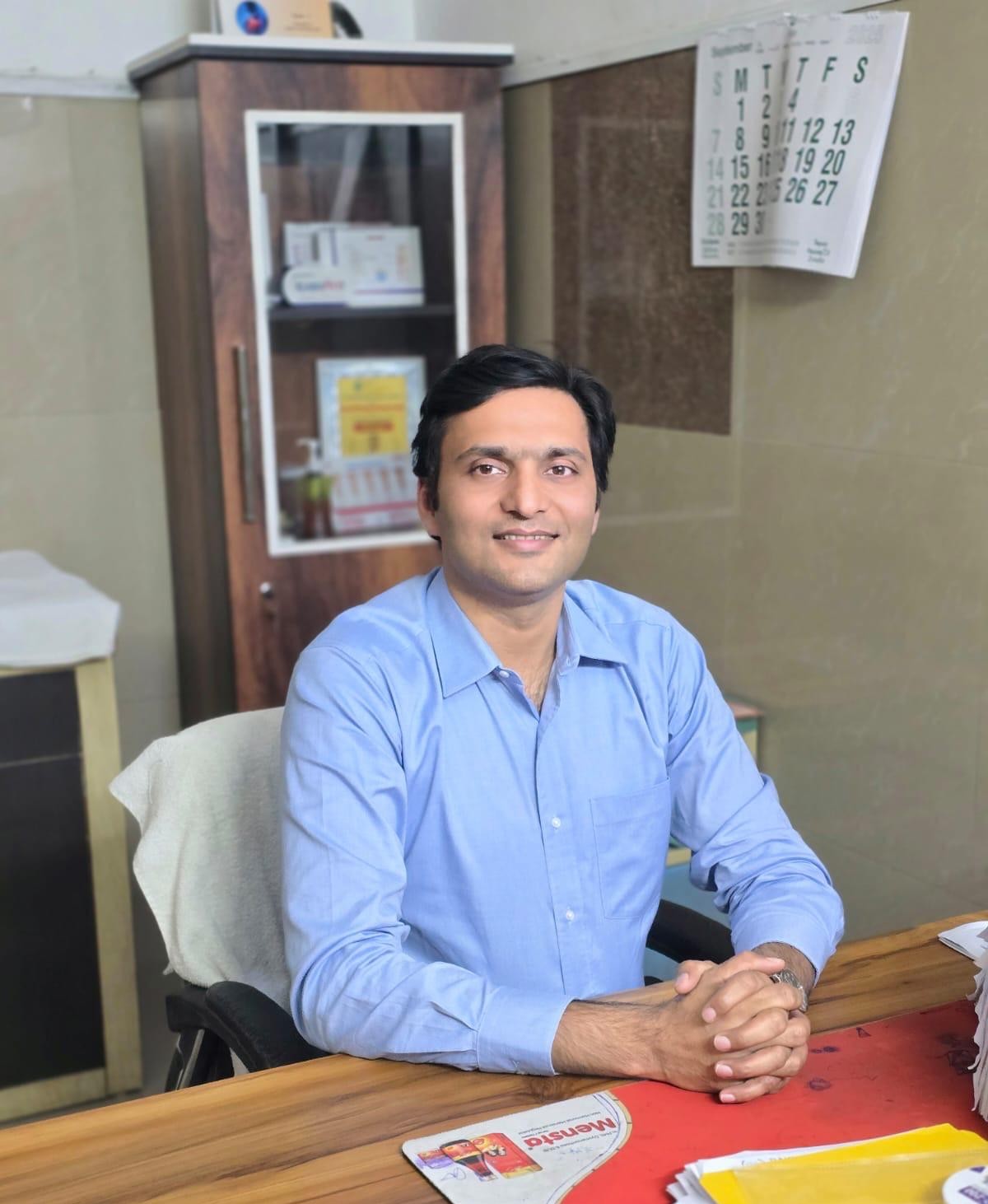
Dr. Abhishek Aggarwal is a highly skilled GI & HPB surgeon with over 10 years of experience in managing complex gastrointestinal and hepato-pancreato-biliary diseases, with a special focus on oncological surgery. He currently serves as Associate Director – GI Oncosurgery at BLK-Max Super Speciality Hospital, where he is actively involved in delivering advanced surgical care for GI and HPB malignancies.
He has trained and worked in reputed high-volume centres, gaining extensive expertise in complex oncological procedures and multidisciplinary cancer care. His clinical practice is firmly grounded in scientific, evidence-based medicine, ensuring that patients receive treatment aligned with the latest global standards and research.
OPD Timing: 09:00 AM – 05:00 PM
Contact Dr. Abhishek →